
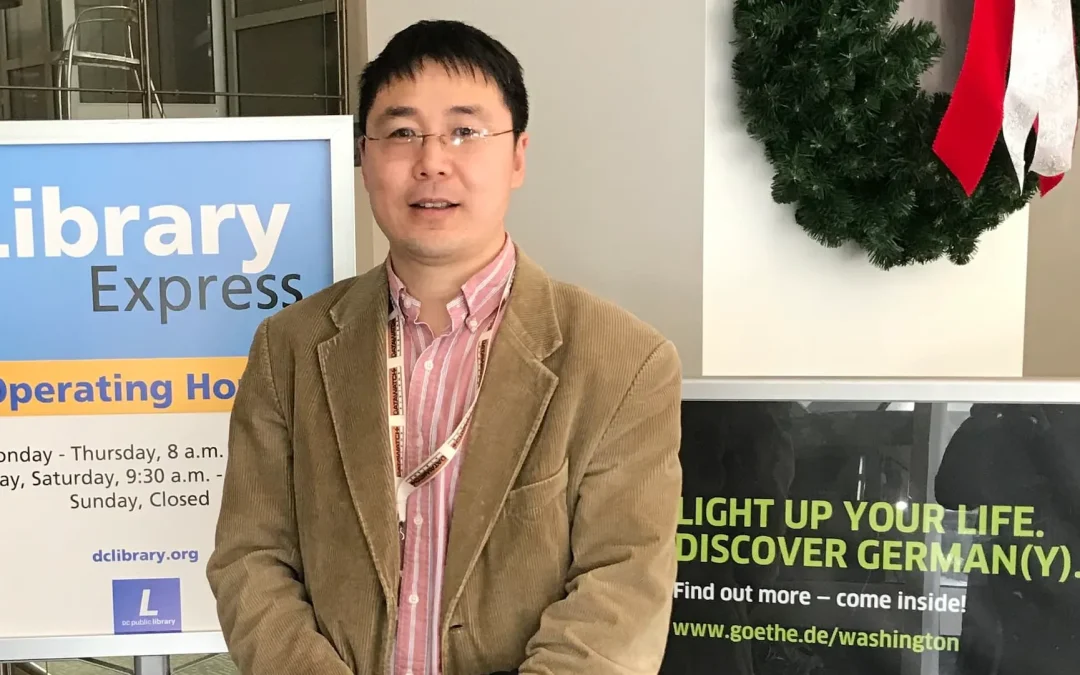
I became a naturalized American citizen in Baltimore after my wife was sworn into her U.S. citizenship. My mother-in-law got her green card through the sponsorship of my wife. During my mother-in-law’s interview, we were required to hire an independent interpreter to represent her since she could not speak English. My wife complained to me about why they needed to hire a professional translator since I am an interpreter myself. Unfortunately, neither one’s relatives nor lawyers are allowed to be someone’s interpreter. The interpreters must be an independent party to avoid bias or partiality. Even though my wife can speak English and I work as a professional interpreter, we still needed to pay several hundreds of dollars for another independent interpreter.
Considering all things, the money you would pay to hire an interpreter is not the kind of fee you want to skip over or avoid doing because it actually matters a great deal to get the most important things settled as an immigrant of any country. Getting a professional translator who can translate accurately between you and the immigration officer is a very important task. Accurately translating helps ensure the desires of the client are communicated to the immigration officer.
Now, many people get excited or nervous when it comes time for this interview because it’s an important date of their life. A lot of emotions can exist. Once they pass the interview, that person(s) may receive their green card soon after. The anticipation of this can make a person excited and eager. Other candidates are extremely nervous because their future hinges on whether they will be accepted or rejected. Good translators know how to communicate effectively despite the emotions in the room. A good translator doesn’t turn off their humanity and act cold; instead, they act professionally and exhibit boundaries. A good translator will talk with their candidates beforehand to prepare for the interview and offer their best efforts at communicating the message effectively. I have found in my own business that when we do this, the clients are often very appreciative in the end. Though Chinese people do not grow up in a culture with a habit of tipping, our Chinese clients usually tip generously after our interpreting services. This shows they are truly appreciative of my/our work, and how important it was to them. Let me give you a recap of a day in the life of a Chinese translator and interpreter at USCIS (U.S. Citizenship and Immigration Services).
I arrive at USCIS Baltimore Field Office at 3701 Koppers St, Baltimore, MD 21227, fifteen minutes earlier than each appointment. This location is a popular place for USCIS immigration interviews. They open at 6:45am in the morning and close at 4:30pm. Most of the time, the client that hired you will reach out to you proactively to make sure you are there on time. But other times, the client may be running late, so you have to wait for them by the entrance. The interpreter is not allowed to enter the waiting area unless the client(s) is present, and you must present the appointment letter to enter the building. Then you must go through a security check. Afterward, the client(s) must go to a window to get an appointment number to register you in the system. The interpreter will then be given a form to sign in front of the immigration officer, and the client(s) will have to sign the interpreter form as well. Then you wait a while for the immigration officer to call your name or number.
This is the interesting part. You are waiting there and chatting with the client(s). You want to respect them by not peppering them with too many questions, but us translators want to get as prepared as possible for the work to come. I usually pay attention to the affect of the clients. This is when I notice whether they are excited or worried. For example, one person didn’t know how to react when I asked what his name was—he was just too excited! Another person seeking asylum was naturally very nervous. I kept chatting with him and praying silently, hoping he would arrive at a place of peace. In the end, I did my best to interpret for him, and everything went smoothly. In this particular case, the lawyer tried to chime in during the interview to interpret something, but the immigrant officer stopped him immediately. Only the professional translator is allowed to translate on behalf of the applicant(s). The lawyer is allowed to be present and listen attentively, which this lawyer did, but they cannot translate. After the interview, the lawyer told the applicant that I did a very good job in interpreting. The lawyer said he likes to point out the mistakes of some interpreters from time to time, but he was very happy with my service. As a professional interpreter, we cannot help or decide the outcome of the interview, but we can do a good job to make the communication smooth, so everyone is happy.
Funny or lucky things can happen to the interpreter as well. One time, I was ready to interpret for a couple when the immigration officer called their names. The immigration officer confirmed the language as Mandarin. Then he said he can speak Mandarin so he would just interview them in Mandarin himself. He told me I wasn’t needed, and that I could go. I asked him if I should stay in the lobby or literally leave, and he said, “You can leave now.” I was surprised and so was the couple, but they were happy since the immigration officer seemed nice and friendly. We had to listen to him and I had to leave, but this was a lucky day for me because I still got paid. With these interpreting assignments, there is usually a 24-hour cancellation policy (it may vary for different interpreters or agencies). This means the client can cancel for free before this period but are obligated to pay after this deadline. It’s fair since the interpreters have to make their time available for you and cannot book other jobs on that day.
So, what is the rate of compensation for this kind of job? You may be interested as a client or as an interpreter. For professional interpreters or translators certified by the American Translators Association (ATA), the average rate is around $100 per hour with a 2 or 3-hour minimum time frame. The time slots vary, and more experienced translators may say no to a 2-hour minimum. There is also usually compensation for traveling time. The average is $50 per hour. Let’s look at an example. It takes me one hour to travel there and back to the place for my interpreting job, so I would charge $50 dollars for that hour on top of the translating service charge. For another popular location in Fairfax, Virginia, it may take me 3 hours back and forth. In this case, I would not charge the full hour rate x3 since I am not interpreting for the whole three hours, but it’s important to note that you aren’t able to do other work during this time. Translators need to consider what to charge to make up for this.
Lastly, there is a charge for mileage. The average fee is $0.70 USD per mile, and this covers the interpreter’s cost of gas and car maintenance. Now, if the interpreter needs to stay beyond the time frame they were contracted for, they may receive compensation according to 15-minute increments. For example, you will get paid 15 minutes if it’s overtime up to 15 minutes. If you spend 20 minutes overtime, you will get paid for 30 minutes extra. Of course, if you hire through an agency, they will add their margins on top of this. There is always room for negotiating though because there are always people who are willing to lower rates if the interpreters are just starting out. In the end, it’s always better to hire a trained and certified interpreter. You may run into trouble hiring someone without professional certification and this is the last thing you want on such a big day!
About Sean Song and Translation Boulevard
Sean Song is a Chinese translator certified by the American Translators Association. He can help you with your Chinese interpreting needs in the Washington DC, Maryland and Virginia areas. Sean’s agency, Translation Boulevard, has a network of interpreters who speak and serve other languages such as Korean, Vietnamese, and Spanish. We can help you get connected with any interpreter for any language you need. Searching for and finding the right qualified interpreter takes time, energy, knowledge and connection, and time is money. Don’t hesitate to reach out to us at (202) 992-2626 or contact@translatinoblvd.com.
We look forward to serving you!